FAQs

Frequently Asked Questions

What’s the difference between electrolysis and laser?
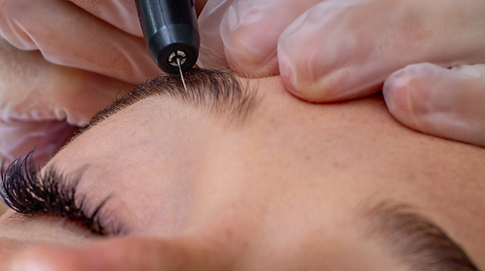
Electrolysis treats each hair follicle individually with a needle to permanently stop another hair growing. Laser tends to treat large areas of skin using a laser or light-based lamp which can stop hair growing for several months before another treatment is needed, hence it is called hair reduction rather than removal. Several BIAE members perform both electrolysis and laser (also called IPL) as the two treatments tend not to be used on the same areas, or because a client will want one result over the other (ie permanent removal with electrolysis requiring a long course of treatments but resulting in no more hair, or quick relief with laser/IPL which will need continued treatment when the hair grows back). You can read more about laser/IPL here. (External link.) Please note we have no affiliation with any laser/IPL company or clinic, nor can we endorse any brand or give advice on any aspects of laser/IPL. We strongly advise you to speak to a qualified laser/IPL technician to discuss your needs.

Which areas can be treated with electrolysis?
Virtually any area, apart from the inside of the nose and inner ear. (The rim of the ear can be safely treated.) Common areas for woman are the face, chest, abdomen, bikini line, fingers and toes. Common areas for men are the upper arms, around the ears, top of the nose, top of the back and around the edges of the beard where ingrown hairs are causing problems. Transgender/transsexual females often require full beard removal and pre-surgery genital hair removal for sex reassignment surgery (SRS) . Please email or call if you are having trouble finding a member who performs pre-SRS hair removal.

Can I have electrolysis if I’m pregnant?
Pregnancy is not normally a contra-indication to the thermolysis method of electrolysis. This method uses alternating current (AC) and as a very weak intensity of current is used during the procedure, there is no risk to mother or unborn child provided both are otherwise healthy, although treatment of the breast and abdominal areas should be avoided, especially in the later stages of pregnancy.  However, the ‘Blend’ or ‘Galvanic’ methods of electrolysis may best be avoided during pregnancy. These methods use direct (DC) electrical current. If you are unsure which method you may be offered, please ask your electrolysist.  If, by chance, you have been having ‘Blend’, please do not worry, it too can be used during pregnancy and should not pose any problem especially if the treatment has been to the facial area. Most clients having treatment are female and may have treatment before they know that they are pregnant, without any ill effects. If you are at all concerned, please discuss this issue with your therapist or GP. (Please note some members may choose not to offer treatment during pregnancy.)

Does it hurt?
It is roughly the same sensation as if you were to pluck the hair. However it varies according to where the hair is and how you have been removing the hair so far. Remember the settings can be adjusted to make the treatment more tolerable, and there are 3 methods of electrolysis called thermolysis, galvanic and blend. Have a consultation with at least 2-3 members to see which suits you best.

How many treatments do I need?
Since everyone has a different density of hair (ie some have lots packed into a small area and others have less hair spaced out) it’s impossible to put a figure on the number of treatments you’ll need. You will certainly need to have regular appointments over a long period of time (at least a year if not more for most areas) as this is how long it takes for every hair to appear at the surface of the skin. Not all our hair is growing at the same time, and it can be quite a shock to find that those 3 or 4 hairs on your chin are actually 30 or more hairs ‘taking turns’ to grow! On top of this your hair thickness, skin sensitivity and other factors affect how fast each hair can be treated. However the appointment time can be as little as 10 minutes or as much as 2 hours or more depending on how large an area needs to be treated. Little and often is the best route to take with electrolysis so try not to start just before a long holiday or before a busy period when you won’t be able to stick to your appointment schedule. Please have a no-obligation chat with your nearest member to discuss the best treatment plan for you as unfortunately it’s just not possible to advise you without seeing you first. You will be able to see the hair reducing throughout your treatment though, so you do not have to wait until the end to see a difference.

What are the side effects? Will I get scarred?
There is usually some redness and a little swelling resembling an insect bite straight after electrolysis. These will disappear after an hour or so. The next day your skin will be clear and shouldn’t show any signs of treatment. The exception is the body which may show tiny pinprick scabs, which will wash off naturally within a week or so. On rare occasions you may see these tiny scabs on the face, usually when the treated hair was distorted or ingrown and hence the surrounding skin was damaged. If you notice any unexpected after effects please make sure to mention them as sometimes it’s hard to tell how the skin will react on first appearance. There is a VERY small risk of temporary scarring if aftercare advice is not followed, such as picking at the area after treatment (your electrolysist will go through this in depth with you.) However permanent scarring should not happen as this denotes repeated overtreatment, which our members know not to do.

I know someone who had electrolysis and it didn’t work. How do I know what to believe?
Do you know if they went to a BIAE member? Did they stick with their treatment or give up after a few weeks? There are many reasons why someone might not have the best impression of electrolysis, usually because of poor treatment, but we can only speak for our members as we have checked that they are performing electrolysis correctly. Why not have a chat with your nearest member, or perhaps just have a very small area treated first to see for yourself. Electrolysis DOES work, but only when performed properly.

I want to have electrolysis but I can’t bear the thought of walking around with hair on my face for months just for my appointments.
You can still remove hair between appointments by cutting or shaving (yes, even on the face) just so long as there is enough to show where the hair is on the day of your appointment.

I can’t find a member near me.
Please drop us an email as new members are joining all the time. We’ll contact you as soon as someone close by becomes available. sec@electrolysis.co.uk

FAQs
PCOS sufferers
Advanced electrolysis treatments for skin blemishes
About the BIAE and what we do
Find your nearest BIAE member